5 Hidden Features of the Ecotank Et 2720 You Must Know About
Introduction
The Ecotank Et 2720 has become a compelling option for buyers seeking low running costs and compact all‑in‑one convenience. On the surface it looks like many other refillable‑tank inkjets: a small footprint, refillable tanks on the front, and wireless printing. Yet beneath that familiar exterior the Et 2720 hides several practical features that make everyday ownership easier, reduce hassles, and save money over time. This article uncovers five of those lesser‑known capabilities, explains why they matter in real‑world use cases, and provides an honest analysis that buyers typically care about: print quality, reliability, connectivity, and long‑term cost.
Five Hidden Features Explained
1. Spill‑resistant, keyed ink bottles and quick‑fill ergonomics
One of the most useful but often overlooked features is the design of the ink refill system. The Ecotank Et 2720 uses refill bottles that are keyed to each tank and engineered to minimize spills and overfilling. For home users who refill under a kitchen light, this design reduces the anxiety of a messy refill and makes the process quick, even for someone doing a first refill.
Real‑world use case: a parent refilling black ink to print homework packets once a month will appreciate how the bottles click into place and stop automatically when the tank is full. This reduces waste, cleanup time, and the risk of dye stains on furniture.
2. Mobile scanning and on‑device PDF creation without a PC
Many buyers assume scanning always requires a computer. The Et 2720’s mobile app support lets a smartphone or tablet become the scanner control center. Users can place documents on the flatbed, initiate a scan from the mobile app, and save scans as multi‑page PDFs directly to the device or cloud storage. This feature is particularly valuable for people who use a laptop infrequently or run a minimal home office.
Real‑world use case: a freelancer needing to send signed contracts while traveling can scan, convert to PDF, and email the file from a phone — no laptop necessary.
3. Quiet printing mode for shared living spaces
Printers are often used in busy households, shared apartments, or small offices where noise matters. The Et 2720 has a lowered-noise option (sometimes called "quiet mode") that slows head movement and reduces mechanical noise during printing. The trade‑off is slightly slower print speeds, but the result is a much less intrusive print experience for late‑night jobs or shared work environments.
Real‑world use case: students living in dorms can run large print jobs between classes without disturbing roommates or study groups.
4. Direct USB scanning to a connected PC or simple USB mass‑storage support
Beyond wireless scanning, the Et 2720 supports direct USB connections that allow it to act as a simple, plug‑and‑play scanner when network connections are unavailable. For situations where a stable Wi‑Fi connection isn’t present or a guest needs to scan quickly, connecting a laptop with USB lets the scanner be ready immediately without network setup.
Real‑world use case: a temporary pop‑up classroom or workshop where organizers bring a laptop and need a reliable way to digitize attendance sheets and handouts without depending on local Wi‑Fi.
5. Front‑facing ink tanks for intuitive level checks and extended monitoring
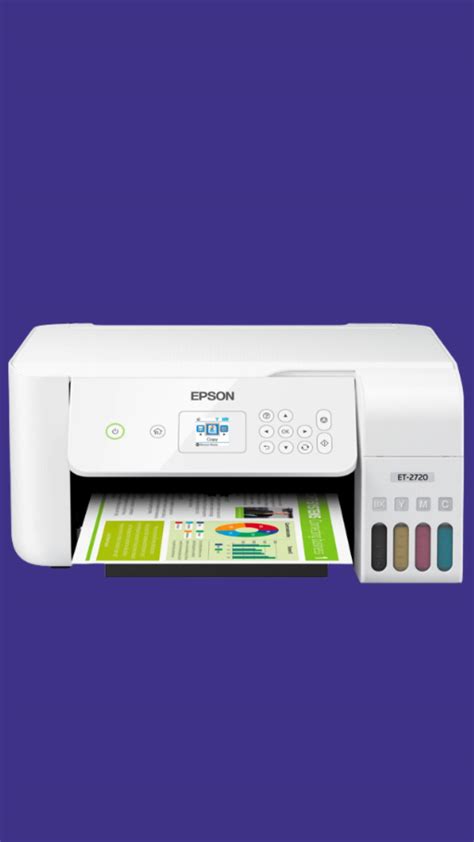
While visible ink tanks are common on EcoTank models, the Et 2720’s front‑facing placement and clear markings make it especially easy to monitor levels at a glance. This simple design reduces the number of surprise “out of ink” events and helps users plan refills. Combined with the included high‑capacity bottles, buyers can realistically estimate months of printing between top‑ups.
Discover deals on Electronics — updated daily.
Shop Amazon →Real‑world use case: a small business printing daily invoices can quickly verify ink levels during morning checks and order replacement bottles before critical runs.
Detailed Product Review and Analysis
Build, footprint, and design
The Ecotank Et 2720 targets users who need an all‑in‑one printer but have limited desk space. The overall build is compact and visually unobtrusive — a low profile that fits on a shelf or the corner of a desk. Controls are minimal and user‑oriented; front‑facing ink bays and a small control panel emphasize ease of use rather than advanced user tweaking.
Print quality and performance
For everyday documents and occasional color graphics, the Et 2720 produces clean text and acceptable color output. Photo enthusiasts seeking gallery quality should temper expectations — glossy photo printing on dedicated photo paper will not match a mid‑range photo printer. However, for social media prints, school projects, and color flyers the results are more than serviceable.
Performance is tuned toward moderate home and small‑office workloads. When not in quiet mode, print speed is adequate for personal use; in quiet mode, the printer emphasizes reduced acoustic impact over throughput. The Et 2720 is best suited for users printing a few dozen to a few hundred pages per month rather than heavy daily workloads.
Scanner and copier functions
The flatbed scanner allows document and photo scanning with reasonable resolution for text and consumer photos. Copying is straightforward, with settings accessible via the mobile app or control panel. The device’s ability to create multi‑page PDFs via mobile scanning is a practical advantage for administrative tasks and record keeping.
Connectivity and software
Wi‑Fi connectivity covers home network printing and common mobile printing standards such as AirPrint and Mopria (where supported by the device’s firmware). Wi‑Fi Direct is helpful for guests or devices that do not want to join a network. The companion mobile app supplies scanning tools, status updates, and setup wizards that simplify Wi‑Fi configuration and routine maintenance.
Running costs and ink supply
Where the Et 2720 truly shines is running cost. Refillable ink tanks dramatically lower cost per page compared with cartridge‑based printers, which is a top concern for buyers who print regularly. The included set of bottles provides a high starting capacity, reducing the need for an immediate add‑on purchase. Refill bottles themselves are sold separately but generally cost far less per equivalent page than cartridges.
Maintenance and long‑term ownership
Maintaining an ink‑tank printer is different from a cartridge system. Users must be mindful of occasional printhead maintenance and periodic alignment, but the straightforward refill process and visible tanks lower the everyday maintenance burden. For low‑volume users, occasional head cleaning is expected; for higher‑volume users, the overall lower cost per page offsets this minor inconvenience.
Who should buy the Et 2720?
The Ecotank Et 2720 is a strong fit for:
- Home users who want convenience plus low running costs.
- Small businesses and freelancers with predictable, moderate monthly print volumes.
- Students and families who value simple setup, wireless printing, and low maintenance.
It is less well suited for high‑volume offices or people whose primary need is high‑end photo printing.
Find top-rated Electronics products at great prices.
View Offers →Pros & Cons
- Pros:
- Significantly lower running costs due to refillable ink tanks
- Front‑facing tanks and spill‑resistant bottles simplify refills
- Mobile scanning and PDF creation without a PC
- Quiet mode for low‑noise printing in shared spaces
- Compact footprint suitable for small desks or shelves
- Cons:
- Not optimized for professional photo labs — photo quality is consumer‑grade
- Lacks some high‑end office features like automatic duplexing in certain workflows
- Replacement ink bottles are an extra purchase — initial savings depend on printing habits
- Moderate duty cycle; heavy printers may outgrow the device
Comparison Table: Ecotank Et 2720 vs Cartridge Inkjet vs Color Laser
| Feature | Ecotank Et 2720 | Typical Cartridge Inkjet | Typical Color Laser |
|---|---|---|---|
| Ink system | Refillable high‑capacity tanks (bottles) | Disposable cartridges | Toner cartridges |
| Running cost (per page) | Lowest for color documents over time | Higher — cost spikes with frequent cartridge changes | Competitive for high volumes, better for text‑heavy workflows |
| Upfront cost | Moderate — priced to include starter ink | Low to moderate | Higher |
| Photo quality | Good for consumer photos | Good to very good depending on model | Not optimal for photos compared to inkjet |
| Noise / Quiet operation | Has quiet mode | Varies by model | Noisier during warm‑up, faster prints when ready |
| Best for | Home and small office users who want low running costs | Casual users and low initial budget buyers | Busy offices with high mono or color text volume |
Buying Guide: What to Consider Before Choosing the Ecotank Et 2720
1. Monthly print volume and cost expectations
Estimate how many pages are printed each month. The Et 2720 becomes cost‑effective quickly if typical monthly printing is moderate to high, especially with frequent color output. Buyers who only print occasionally may not feel the per‑month savings immediately, but the convenience of visible tanks and infrequent refills still offers value.
2. Photo versus document needs
Decide whether photo quality is a priority. The Et 2720 is well suited to documents, charts, and casual photos. If the primary use case is professional photo production, look at a dedicated photo printer with more color inks and higher DPI capabilities.
3. Connectivity and mobile workflows
Confirm that the feature set matches daily workflows. Mobile scanning, AirPrint, Mopria, Wi‑Fi Direct, and cloud upload options save time for those who rely on phones or tablets. If a multi‑user office network demands advanced security or complex driver setups, verify that the network supports the Et 2720’s connectivity options.
4. Space and placement
Measure the intended space. The Et 2720’s compact footprint is an advantage, but consider paper trays and the scanner lid when planning placement. A top‑opening scanner requires clearance above the unit.
5. Long‑term maintenance and support
Check warranty terms and service options. Refillable systems are low cost over time, but users should understand the manufacturer’s guidance for head cleaning, maintenance boxes, and software updates. Third‑party ink alternatives exist, but using recommended ink bottles preserves warranty coverage and reduces risk of clogging.
6. Replacement ink availability and cost
Compare the price and availability of replacement bottles locally or through preferred suppliers. The convenience of local pickup or reliable online shipping may affect the overall ownership experience.
7. Environmental considerations
Refillable ink systems typically reduce packaging waste compared with multiple disposable cartridges. Buyers who prioritize lower environmental impact will find a tangible benefit in the Et 2720’s approach.
Conclusion
The Ecotank Et 2720 is more than a compact refillable‑tank printer — it blends everyday practicality with a few hidden conveniences that ease ownership. Spill‑resistant keyed bottles, intuitive front‑facing tanks, mobile scanning without a PC, quiet operation, and simple USB scanning are features that materially improve user experience in real settings. For home users, small businesses, and students who value predictable running costs and straightforward operation, the Et 2720 represents a sensible balance between price, convenience, and long‑term value. Buyers should weigh monthly print volume, photo needs, and connectivity expectations when deciding, but for many the Et 2720’s hidden strengths make it a quietly powerful choice.