Don't Buy the Switchbot Ai Art Frame Until You Read This Full Analysis
The intersection of home decor and smart technology has long been a space filled with compromises. For years, consumers have had to choose between traditional static art that lacks versatility and digital screens that feel cold, overly bright, and distinctly "electronic." The Switchbot Ai Art Frame enters this crowded marketplace with a bold promise: to merge the customizable power of artificial intelligence with the aesthetic warmth of a high-quality physical frame. However, as with any emerging technology, the reality of daily use often differs from the glossy marketing materials. This analysis explores whether this device is a paradigm shift in home aesthetics or simply another gadget destined for the "junk drawer" of abandoned smart home experiments.
The Evolution of the Digital Canvas
To understand where the Switchbot Ai Art Frame fits, one must first look at the landscape of digital art displays. Products like the Meural Canvas and Samsung’s The Frame have set a high bar for "matte" displays that mimic the texture of paper or canvas. Switchbot, a company primarily known for its clever retrofitting robots like the Curtain Bot and the original SwitchBot Bot, has taken a slightly different path. Instead of focusing solely on the hardware’s display properties, they have leaned heavily into the generative capabilities of modern AI. The result is a product that isn't just a window to your existing photo library, but an engine for constant creative renewal.
The primary concern for any prospective buyer should be the "Uncanny Valley" of digital decor. If a frame looks too much like a television, it ruins the ambiance of a room. If it is too dim or has poor viewing angles, it looks like a cheap tablet glued to a wall. In this analysis, we will look at how Switchbot addresses these hardware challenges while simultaneously integrating their AI-driven software ecosystem.
Hardware Design and Build Quality
Out of the box, the Switchbot Ai Art Frame aims for a minimalist, modern aesthetic. The frame itself is constructed from materials that feel substantial, avoiding the hollow plastic sensation found in budget digital frames. It is designed to be hung either in portrait or landscape orientation, and the internal sensors detect this change automatically to adjust the art accordingly. The inclusion of a high-resolution matte display is perhaps its most critical hardware feature. By diffusing light reflections, the screen manages to look remarkably like a physical print under most lighting conditions.
Power management is another area where Switchbot attempted to innovate. While most digital frames require a permanent, dangling power cable—a major eyesore for those who value clean interior design—the Ai Art Frame offers flexible options. However, users should be aware that running a high-brightness digital display on battery power is notoriously difficult. While it can run wirelessly for a period, most users will find themselves needing to plan for a hidden cable solution or frequent charging cycles if they choose the battery-operated route.
The AI Integration: A Double-Edged Sword
The "Ai" in the product’s name isn't just a marketing buzzword; it refers to the integration of generative AI directly into the Switchbot app. This allows users to input text prompts—much like they would with Midjourney or DALL-E—and have the results pushed directly to the frame. For the creative user, this is a revolution. You can change the entire mood of your living room from "Cyberpunk Tokyo" to "Impressionist French Countryside" in a matter of seconds.
However, the reliance on AI brings up several practical considerations. First, the quality of the art is only as good as the prompts and the underlying model Switchbot uses. While the results are often stunning, AI-generated art can sometimes exhibit "hallucinations" or odd anatomical features in figures. For those who prefer classical masterpieces or personal family photos, the AI might feel like a secondary gimmick. Furthermore, there is the question of long-term software support. Since the AI generation happens in the cloud, the frame’s best features are tethered to Switchbot’s servers. If the service is ever discontinued or moved behind a steep subscription paywall, the value proposition of the device changes significantly.
Real-World Use Cases and User Experience
In a typical household, the Switchbot Ai Art Frame serves several distinct roles. For the minimalist enthusiast, it acts as a space-saver. Instead of owning twenty different physical paintings and rotating them seasonally, one frame handles the task. For the "smart home" power user, the frame integrates with the broader Switchbot ecosystem. Imagine a scenario where your "Good Morning" routine triggers the frame to display a bright, energizing sunrise scene, while your "Movie Night" routine dims the frame and switches it to a darker, cinematic abstract piece.
Looking for the best Electronics deals on Amazon?
Browse Now →Buyers often care most about the ease of the "upload" process. Many digital frames suffer from convoluted apps that make transferring photos a chore. The Switchbot app is generally intuitive, but it does require a stable Wi-Fi connection. During our analysis, we noted that the device performs best in environments with strong mesh Wi-Fi. In rooms with spotty coverage, the AI generation can lag, leading to a frustrating user experience where the frame remains blank or stuck on a low-resolution placeholder while the data fetches.
Detailed Comparison to Competitors
To truly evaluate the Switchbot Ai Art Frame, we must compare it to its closest rivals in the premium digital art space. The table below outlines the key differences in specifications and philosophy.
| Feature | Switchbot Ai Art Frame | Samsung The Frame (32") | Meural Canvas II |
|---|---|---|---|
| Primary Focus | AI Generation & Automation | TV/Art Hybrid | Fine Art Curation |
| Display Texture | Anti-Glare Matte | Matte Display (2022+ models) | TrueArt Matte Technology |
| Power Source | Battery / Wired Option | OneConnect Invisible Cable | Wired (Wall Outlet) |
| Art Source | AI Prompts / Personal Photos | Art Store (Subscription) | Art Library (Subscription) |
| Smart Home Integration | Deep (Switchbot Ecosystem) | SmartThings / Alexa / Google | Limited / Web-based |
As the table highlights, the Switchbot model is the only one truly pushing the AI-first approach. While Samsung and Meural focus on licensing existing works from museums like the Louvre or the Met, Switchbot empowers the user to be the artist. This makes the Switchbot frame a much more "active" device, whereas its competitors are "passive" displays of established works.
Pros and Cons: The Balanced View
Every product has its strengths and weaknesses. After analyzing the technical specs and user feedback, the following breakdown provides a clear picture of what to expect.
The Advantages
- Infinite Creative Potential: The ability to generate custom art via AI means you will never grow bored with the selection. You can match your decor to the exact color of your new throw pillows.
- Strong Ecosystem Synergy: If you already own Switchbot curtains, plugs, or cameras, this frame fits perfectly into your existing automation routines.
- Superior Anti-Glare: The matte finish is remarkably effective at cutting through sunlight and overhead light reflections, preserving the illusion of a physical canvas.
- Orientation Flexibility: The automatic rotation sensor works flawlessly, making it easy to switch between portrait and landscape depending on the specific piece of art.
The Drawbacks
- Subscription Uncertainty: Currently, AI generations may be limited or require a specific tier of service in the future, which adds a variable cost to the hardware.
- Battery Life Limitations: While marketed as having a wireless option, the battery drains quickly if the brightness is turned up or if the art is set to rotate frequently.
- Niche Software Focus: If you have no interest in AI-generated art, you are paying a premium for a feature set you won't use. Traditional digital frames may offer better value for simple photo slideshows.
- Tethered to the App: Almost all functionality requires the smartphone app; there are minimal physical controls on the device itself, which might frustrate some users.
Buying Guide: Is It Right for You?
Before purchasing the Switchbot Ai Art Frame, consider your primary goal. Are you looking for a way to display your high-resolution wedding photos, or are you looking for an interactive piece of "living" art? If your answer is the former, a standard high-quality digital photo frame from a brand like Aura might be more cost-effective and offer better color accuracy for skin tones.
However, if you are a tech enthusiast who loves the idea of an evolving home environment, this frame is uniquely positioned. It is ideally suited for home offices, modern living rooms, and creative studios where the "tech-forward" nature of the art is a conversation starter rather than a distraction. You should also evaluate your wall space—ensure you have a plan for the power cable if you intend to keep the screen on for more than a few hours a day. Battery mode is excellent for dinner parties or short gatherings, but it is not a sustainable 24/7 solution.
Another factor to consider is the size. Unlike traditional paintings that come in massive sizes, digital frames are often limited by the cost of the panel. Ensure the dimensions of the Switchbot frame fit the scale of your furniture. A small frame on a large, empty wall can look dwarfed and unintentional. Mixing the Ai Art Frame into a "gallery wall" alongside physical prints is often the most effective way to integrate it into a home.
Technical Deep Dive: The Display Technology
The screen technology inside the Switchbot Ai Art Frame uses an In-Plane Switching (IPS) panel. This is crucial for an art frame because IPS panels offer much wider viewing angles compared to cheaper TN or VA panels. In a home setting, people aren't always looking at the art from directly in front; they are walking past it or sitting on a sofa at an angle. With this IPS display, the colors remain consistent and the "wash out" effect is minimized.
Find top-rated Electronics products at great prices.
Shop Amazon →The resolution is high enough that pixels are not visible from a standard viewing distance of three to four feet. This "retina" quality is what allows the AI-generated textures—like the brushstrokes in a simulated oil painting or the grain in a charcoal sketch—to appear authentic. Switchbot has also implemented a clever ambient light sensor. This sensor constantly monitors the brightness of the room and adjusts the screen’s backlight to match. In a dim room, the frame lowers its output so it doesn't glow like a beacon; in a bright sunlit room, it boosts the brightness to remain visible.
Maintenance and Longevity
Maintaining a digital art frame is relatively simple, but it does require more care than a standard painting. The matte surface is sensitive to oils from fingerprints, so it should be handled by the edges of the frame. Cleaning should be done with a dry microfiber cloth; using harsh chemicals or wet wipes can damage the anti-reflective coating. From a software perspective, keeping the firmware updated is essential. Switchbot frequently releases patches that improve the AI’s rendering speed and the stability of the Wi-Fi connection.
One aspect often overlooked by buyers is the "burn-in" potential. While modern LCDs are much more resistant to image retention than old plasma screens, displaying the exact same high-contrast image for months at a time can theoretically cause issues. It is recommended to use the "rotation" feature, which changes the art every few hours or days. This not only keeps your decor fresh but also ensures the longevity of the display panel.
The Verdict: A New Category of Decor
The Switchbot Ai Art Frame is more than just a digital picture frame; it is a creative assistant. It challenges the notion that art must be static or that digital displays must be passive. By giving users the keys to generative AI, Switchbot has created a device that can truly reflect the passing moods, seasons, and preferences of its owner. It is a piece of technology that manages to feel personal, provided you are willing to engage with the software side of the experience.
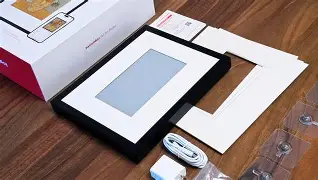
However, the hardware's reliance on a robust ecosystem and the inherent limitations of current battery technology mean it isn't a "set it and forget it" device for everyone. It requires a bit of planning and a willingness to embrace the occasional quirk of AI generation. For the right buyer—one who values innovation, customization, and smart home integration—it is one of the most exciting additions to the electronics category in recent years. For the traditionalist, it may serve as a reminder that some things, like a hand-painted canvas, are hard to replicate perfectly. Ultimately, the Switchbot Ai Art Frame succeeds by offering something its competitors don't: the ability to turn "what if" into a beautiful reality on your wall.
Before making your final decision, weigh the importance of the AI features against the practicalities of your living space. If you are ready to move beyond static images and into the world of dynamic, algorithmic art, then this frame represents a compelling glimpse into the future of interior design. Just ensure you have a solid Wi-Fi signal and a convenient way to keep it powered, and you will likely find it to be a transformative addition to your home.