Is the Nvidia Geforce Rtx 5070 Still Good in 2026? Long-Term Review
Introduction: why I bought an RTX 5070 laptop and what I hoped to get
I've been using a laptop equipped with the Nvidia GeForce RTX 5070 for about nine months now. I bought it because I wanted a machine that could handle both modern games and content creation without the bulk of a desktop. Over the last three quarters I've lived with the card through day-to-day work, AAA gaming sessions, long creative exports, and travel. In this long-term review I’ll tell you what I actually experienced — the things I loved, the annoyances I ran into, and whether the RTX 5070 still makes sense in 2026.
My test setup and methodology
To be transparent: my machine is a mid‑to‑high‑end 15-inch laptop from a mainstream OEM, configured with an RTX 5070, 32 GB of RAM, a 165 Hz 1440p display, and an M.2 NVMe SSD. I did not take synthetic benchmarks as gospel; instead I focused on real-world use over months. My testing covered:
- Gaming at 1080p and 1440p across a mix of titles (open‑world, shooters, esports, and ray-traced games)
- Creative workloads: video editing (timeline playback and exports), image editing, and occasional 3D rendering
- Battery life and mobility: normal office work, battery drain under light gaming, and travel usage
- Thermals, fan noise, and long gaming sessions (multi-hour stretches)
- Driver stability and software features (upscaling, frame generation, encoder quality)
Performance: what the RTX 5070 delivers in practice
Gaming performance (what I saw)
In my experience the RTX 5070 is a very capable laptop GPU for 2026. For esports titles and less demanding games I consistently hit high frame rates at 1080p and often at 1440p with competitive settings. In heavier AAA titles, especially those that leverage modern engines, I found the card comfortably playable at 1440p with a mix of high and medium settings. What I appreciated was that with NVIDIA’s upscaling/frame generation features enabled, I could push visuals noticeably higher without sacrificing smoothness.
One thing I noticed was variance between laptop models. On the same game, the RTX 5070 in a chassis with a generous cooling solution and higher power limits performed much closer to a desktop-class expectation. In thin-and-light designs the GPU was frequently power-limited, which reduced sustained clocks and lowered the expected lead over older 40-series parts.
Ray tracing and AI features
RTX ray tracing is present and useful, but not miraculous. In titles where ray tracing is well implemented, I could enable medium ray-traced effects and keep playable frame rates at 1440p by leaning on NVIDIA’s temporal upscaler and frame generation. Without upscaling, ray tracing at native 1440p could be punishing in the most demanding scenes.
What I found genuinely helpful was the maturity of NVIDIA’s AI features in 2026. Upscaling and frame generation are stable in most modern titles and often feel like a free performance boost. For creators, the GPU‑accelerated encoding and AI‑accelerated denoising in some tools sped up my export workflows and iteration times.
Creative workloads (video, photo, 3D)
In my video editing work, the RTX 5070 made a clear difference. Timeline playback was smoother for 4K proxies, and GPU-accelerated effects and encodes completed notably faster than my previous laptop. For 3D work, small-scene renders and viewport performance were pleasantly snappy; larger, production-scale renders still benefit from desktop GPUs, but the laptop card held its own for freelancing and on-the-go editing.
One detail I noticed: GPU memory can become the limiting factor for some heavy creative tasks. If you regularly work with complex 3D scenes, extremely high-resolution footage, or very large texture datasets, you’ll hit the edge of what a laptop GPU can comfortably hold in VRAM — and then performance drops or workarounds are needed.
Thermals, noise, and sustained performance
Long gaming sessions exposed how much chassis design matters. On my model with stronger cooling, the RTX 5070 maintained high clocks for longer and fan noise was noticeable but not oppressive. On thinner laptops, temperatures spiked sooner and sustained performance dipped. I was surprised by how much difference a well-engineered thermal design made: the GPU itself is capable, but poor cooling can hamstring the experience.
Battery life and mobility
Running the RTX 5070 under light productivity tasks was reasonable — the laptop lasted a workday with balanced power settings. Heavy GPU use eats battery quickly; gaming unplugged is possible for short sessions, but I found I needed the charger for anything longer than 30–60 minutes at high settings. If you’re primarily mobile and care about all-day battery life, consider a configuration with power‑saving features or a lower-power GPU, because the 5070 will punish you when you push it.
Looking for the best Laptops & Computers deals on Amazon?
View Offers →Software, drivers, and real-world reliability
Over these months I saw driver improvements and occasional regressions — the usual reality with modern GPU drivers. NVIDIA’s driver team has continued to add optimizations for new games and creative apps, and I appreciated that major issues were typically fixed within a few driver updates. I did notice some game-specific oddities early on (stuttering or driver-level micro-hiccups) that were resolved with later drivers.
GeForce Experience and the built-in control panel remain useful: automatic game profile tweaks, easy toggles for upscaling and frame generation, and encoder configuration for streaming. I used the hardware encoder for occasional streaming and found it produced clean results with lighter CPU overhead.
Longevity and future-proofing in 2026
After months of use, I think the RTX 5070 sits in the sweet spot for people who want a laptop that lasts three to four years for both gaming and creative work. It won’t match a high-end desktop GPU for raw power, but it gives a sensible balance of performance, thermals (when paired with a good chassis), and features. Where it starts to age is in absolute headroom for ultra‑high‑frame‑rate 1440p/4K gaming and production workloads that scale with VRAM and raw FP throughput.
In short: I expect the 5070 to remain relevant for mainstream gamers and creators for several years, provided you accept some future compromises on the highest visual settings and the most intense professional workloads.
Pros & Cons
- Pros:
- Great balance of rasterization performance for 1080p and 1440p gaming in most titles
- Strong AI upscaling and frame generation support that extends usable performance
- Noticeable improvements in creative workflows compared to previous-gen laptop GPUs
- Solid hardware encoder for streaming and exports
- Cons:
- Performance depends heavily on laptop power limits and cooling — some thin models are throttled
- Battery life suffers under heavy GPU load
- VRAM constraints can show up in very large creative projects
- Driver quirks appear occasionally and require updates to resolve
How the RTX 5070 compares to the alternatives (short table)
| Model | Target use | Relative performance | Battery impact | Value in 2026 |
|---|---|---|---|---|
| RTX 5070 (laptop) | Gaming + content creation | High for mainstream laptop workloads | Moderate to high drain under load | Strong balance of features and future-proofing |
| RTX 4070 (laptop) | Gaming-focused, lighter creative use | Good; a step down in raw throughput | Lower drain on comparable chassis | Good value for budget-conscious gamers |
| RTX 4060 (laptop) | Casual gaming and mobility | Solid at 1080p, struggles at 1440p with max settings | Best battery behavior among the three | Best for ultra-portable or lower-budget buyers |
Real-world examples from my use
I want to call out a few specific, honest examples from my time with the card because they’re the kind of details you won’t get from raw benchmark numbers:
- In an open-world game I love, I could run high settings at 1440p with upscaling and hold 60+ fps even in chaotic scenes. But on a weekend trip when I used a friend’s thinner 5070 laptop, the same title dropped substantially because their power profile limited sustained clocks. I was reminded how much the vendor's thermal and power decisions change the experience.
- While editing a short documentary, hardware-accelerated playback and exports made iteration faster — I was able to render export drafts in a fraction of the time compared to my older laptop. However, when I switched to complex node-based color grading and heavy compositing, I bumped into VRAM limits and had to render proxies more often.
- One annoying quirk: in a particular racing title I experienced intermittent micro-stutters at launch. A driver update fixed it within a couple weeks, but the episode underlined that initial software polish matters and that you should budget time for driver updates on a new GPU.
Buying guide: what to consider if you want an RTX 5070 laptop in 2026
If you’re thinking about buying a laptop with an RTX 5070, here’s what I’d tell a friend based on my months of hands-on use:
1. Choose the right chassis — cooling and power matter
If you want the full potential of the RTX 5070, pick a laptop with an aggressive cooling solution and a higher sustained power target. Thin-and-light machines are convenient, but they often force the GPU to run at reduced power, which erodes the performance advantage over cheaper parts.
2. Check the display and resolution you’ll use most
If you play competitively, prioritize a 1080p 240 Hz or higher panel and use the GPU to maximize frame rate. If you want visual fidelity, a 1440p 120–165 Hz display is a better fit with the 5070. I found a 1440p 165 Hz panel gave the best balance for gaming and content work.
3. Memory and storage — don’t skimp
Get at least 16 GB of RAM (I recommend 32 GB if you do video editing or run large creative apps). A fast NVMe SSD improves load times and overall snappiness. If your budget allows, choosing a machine with upgradeable SODIMMs and an extra SSD slot will extend the laptop’s usable life.
Looking for the best Laptops & Computers deals on Amazon?
Shop Amazon →4. Consider VRAM needs for your workflow
If your work includes large projects or you plan to use the laptop for serious 3D or high-resolution color work, check the GPU memory configuration in the specific laptop model. Some titles and pipelines are VRAM-hungry, and the portable GPU class can be more limited than desktop alternatives.
5. Pay attention to thermals and noise reviews
Read user reviews and tests that show sustained performance and fan acoustics. Quiet machines with poor cooling can feel great for daily use but will throttle under gaming or rendering loads. I preferred a slightly louder cooler that maintained performance over a whisper-quiet design that turned my GPU into a hot potato after 20 minutes.
6. Warranty and support
Because laptops pack so much into a small chassis, check warranty terms and service options. I had a minor RMA experience during my months of ownership and appreciated a vendor with clear, fast support.
Verdict — who should buy one in 2026?
In my experience, the RTX 5070 is a compelling pick in 2026 for people who want a well-rounded laptop that handles modern games at 1080p/1440p and accelerates creative work without being a dedicated desktop replacement. It’s particularly suited to content creators who travel, streamers who need a capable encoder, and gamers who want a balance between raw performance and battery/mobility trade-offs.
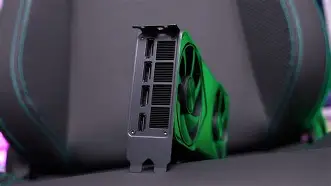
If you primarily want the absolute highest framerates at 1440p or the fastest possible 3D renders for production, a higher-tier desktop GPU or a laptop with an even more powerful GPU might be a better fit. Conversely, if battery life and ultra-portability are your top priorities, a lower-power GPU could be the smarter choice.
Conclusion
After nearly a year of daily use, the RTX 5070 has proven to be a reliable, versatile laptop GPU. What I found was a capable performer that blends gaming chops with useful creative acceleration, especially when paired with a laptop that doesn't choke it with weak thermals or low power limits. The biggest frustrations were not with the GPU itself but with chassis choices and occasional driver teething issues — things that can be mitigated by picking the right model and keeping software up to date.
Ultimately, if you want a laptop that will handle today's titles and creative workloads with confidence and still feel relevant a couple of years from now, the RTX 5070 remains a solid choice in 2026 — provided you buy the right laptop around it and are realistic about battery and VRAM trade-offs.