Pulsefire Haste Specs, Features, and Value: Is it worth the price tag?
Introduction
The Pulsefire Haste is HyperX's entry into the ultra-lightweight gaming mouse category, aimed at players who prioritize speed, low inertia, and minimalist design. Lightweight mice have become a significant trend in competitive gaming and content creation because they enable quicker aim adjustments and reduce fatigue during long sessions. This article examines the Pulsefire Haste in detail—its design, performance, software, real-world use cases, and where it sits in the market—to help potential buyers decide whether it delivers the value it promises.
Product overview and positioning
The Pulsefire Haste is marketed as a featherweight, performance-focused peripheral. Its core selling points are a honeycomb shell to reduce mass, low-friction feet for smooth tracking, reliable mechanical switches for crisp clicks, and a high-performance optical sensor tuned for gaming. HyperX positions the Haste for esports players and users who prefer fast, flick-heavy playstyles as well as productivity users who appreciate a nimble, comfortable mouse for extended daily use.
Core specifications (overview)
Specifications vary slightly by revision and regional SKU, but the Pulsefire Haste typically offers the following characteristics:
- Weight: Approximately mid-to-high 50s grams for the wired honeycomb model (not including cable), making it one of the lighter mainstream wired gaming mice.
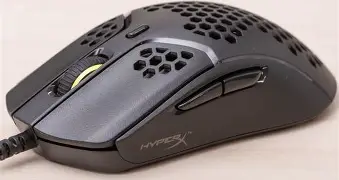
- Shell: Honeycomb perforated design to reduce weight and increase ventilation.
- Sensor: High-precision optical sensor; configurable DPI sensitivity and polling rates commonly up to 1000 Hz (1 ms).
- Switches: Mechanical primary switches rated for tens of millions of clicks, designed for fast actuation.
- Skates/Feet: Low-friction PTFE-style feet for consistent glide across mousepads.
- Connectivity: Wired USB connection for stable, low-latency input (some later variants may include wireless models).
- Software: Optional configuration utility for remapping buttons, polling rate, DPI steps, and RGB customization on supported models.
Design and build quality
The Pulsefire Haste uses a honeycomb chassis—an established approach for shaving weight without sacrificing structural integrity. The perforated pattern reduces material while preserving rigidity in key areas. For users who sweat during long sessions, the holes also provide passive ventilation.
Build quality generally skews toward practical and functional rather than luxurious. The shell and buttons are molded with tight tolerances, and seams are typically unnoticeable during normal use. The lightweight nature can make the mouse feel less “solid” compared to heavier, all-plastic shells, but most users trade a bit of perceived heft for the performance benefits of reduced mass.
Cable and connectivity
The wired Pulsefire Haste usually ships with a lightweight, flexible cable—commonly described in the industry as paracord-style—which reduces drag and mimics the freedom of a wireless mouse. The connector and strain relief are straightforward and built for durability, but the mouse’s performance identity remains focused on responsiveness and minimal input friction.
Sensor, switches, and performance
Performance is the area where the Pulsefire Haste aims to shine. HyperX outfits the mouse with a high-quality optical sensor calibrated for precise tracking across common gaming surfaces. The sensor's CPI/DPI steps and polling rate options let users tune sensitivity for everything from fine sniping to rapid flick shots.
Primary switches are engineered for tactile responsiveness and longevity. In practical terms, the click feel is crisp and consistent—valuable for both competitive play and rapid clicking tasks. The combination of light weight, responsive switches, and a dependable sensor results in a mouse that feels “fast” and direct in-hand.
Latency and esports suitability
With polling rates up to 1000 Hz and a wired connection, the Pulsefire Haste offers latency characteristics that meet standard esports expectations. Players who depend on sub-10ms responsiveness will find the Haste competitive. For top-tier players, the decisive factors are not just latency but the entire ecosystem—sensor consistency, button actuation, and how the mouse fits an individual’s grip and movement style.
Software and customization
HyperX typically provides configuration software that enables DPI profiles, button remapping, lighting customization (on RGB models), and on-board memory to save settings. The software’s interface is straightforward and functional—sufficient for users who want to tweak sensitivity or reassign side buttons without a steep learning curve.
Discover deals on Electronics — updated daily.
See Deals →That said, lightweight-mouse buyers often value plug-and-play simplicity: many competitive users prefer to use default settings or minor DPI changes through a simple mouse button combination. The Haste accommodates both workflows.
Ergonomics and grip styles
The Pulsefire Haste features a compact, low-profile shape that suits claw and fingertip grips particularly well. Palm-grip users with larger hands may find it less supportive than fuller-bodied mice. The honeycomb design does not noticeably affect comfort for most users, though some may dislike the textured sensation of the perforations during prolonged contact.
Because the mouse is lightweight, it favors quick wrist movements and small adjustments. Those who depend on large sweeping arm motions may need to adapt to the lower inertia—some players find it improves precision and reduces fatigue, while others prefer a heavier mass for momentum control.
Durability and maintenance
Durability is a practical consideration for lightweight mice because material is removed to save grams. The Pulsefire Haste maintains durability through reinforced internal structures and quality control. Primary switches and feet are replaceable in many user-maintainable designs, but care should be taken when cleaning to avoid pushing debris into perforations.
Maintaining consistent glide involves periodically checking and replacing PTFE feet if they become uneven. The honeycomb shell can collect dust; a compressed-air blast or soft brush usually keeps the mouse clean without risking damage.
Real-world use cases
Several buyer profiles map well to the Pulsefire Haste’s strengths:
- Competitive FPS players: Those who favor fast flicks, micro-adjustments, and low fatigue benefit from a sub-60 g mouse.
- Esports trainees: Players practicing high-frequency aim drills will appreciate the reduced physical resistance that speeds micro-adjustments.
- Streamers and content creators: Lightweight mice reduce hand strain during long editing or streaming sessions, and the simple aesthetic integrates well into clean desk setups.
- Everyday users who prioritize comfort: The Haste can be an ergonomic pick for people who value lightness and responsive input for productivity software and web navigation.
Conversely, certain users may not prefer it:
- Large-hand palm-grip users who want full palm support may feel the Haste is too compact.
- Users who prefer a premium, heavy-feeling product for perceived sturdiness might find the ultra-light approach less satisfying.
Pros & Cons
- Pros:
- Exceptionally light for fast, low-effort aiming and reduced fatigue.
- Responsive sensor and switches suitable for competitive play.
- Low-friction PTFE skates provide smooth glide across mousepads.
- Honeycomb shell promotes ventilation and lowers weight.
- Simple, effective software for basic customization and on-board profile storage on supported models.
- Cons:
- Honeycomb design may accumulate dust and can feel unusual to some users.
- Compact shape may not suit large-hand palm-grip users.
- Perceived build solidity is lower than heavier, unperforated mice.
- Variants and revisions mean feature sets (sensor model, switch manufacturer, wireless options) can differ between purchases.
Comparison table
| Model | Approx. Weight | Shell Type | Sensor & Polling | Best for |
|---|---|---|---|---|
| Pulsefire Haste | ~58–60 g (wired) | Honeycomb perforated | High-precision optical; up to 1000 Hz polling | Fast FPS play, low-fatigue sessions |
| Glorious Model O | ~58–67 g | Honeycomb perforated | High-precision optical; up to 1000 Hz polling | Esports & general gaming |
| Logitech G Pro (compact) | ~80–85 g (varies by model) | Solid shell | Pro-grade optical sensor; up to 1000 Hz | Pro players who prefer classic shapes |
| Razer Viper Mini | ~61 g | Solid shell (smaller footprint) | Reliable optical sensor; up to 1000 Hz | Small-hand users & fingertip grip |
Buying guide: How to decide if the Pulsefire Haste is right for you
When evaluating the Pulsefire Haste, buyers should consider the following criteria to ensure the mouse aligns with their needs:
1. Grip style and hand size
Measure how your hand rests on a mouse. Claw and fingertip grips pair naturally with the Haste’s compact, low-profile shape. Larger palm-grip users may prefer a fuller-bodied mouse with more palm support.
Find top-rated Electronics products at great prices.
Shop Amazon →2. Playstyle and game genres
Fast, twitch-focused FPS and battle royale games benefit from a lightweight mouse. Strategy, MMO, and productivity users who require many macros or a heavier feel could consider alternatives that provide more programmable buttons or mass for control.
3. Weight preference and adaptation
Some players switch from heavier mice and must adapt to a lighter mass. This adjustment period can range from a few hours of play to several days. If uncertain, test a similar lightweight mouse in-store or borrow one from friends to see whether the reduced inertia suits the user’s motion patterns.
4. Build and maintenance
Are the aesthetics and honeycomb maintenance acceptable? If a very clean desk and minimal maintenance are priorities, be prepared to clean dust from perforations occasionally. Check warranty terms for the specific SKU to ensure peace of mind.
5. Software needs
Decide whether advanced macro programming and deep software integration are necessary. The Haste’s software covers common needs like DPI, polling rate, and button remapping but is not targeted at elaborate macro scripting found in some MMO-focused mice.
6. Price vs alternatives
Compare the Haste’s price to similarly spec’d lightweight mice. Value is subjective: the Haste competes on weight-to-performance ratio. If a buyer seeks premium materials, wireless connectivity in a single package, or boutique features like modular top covers, budgets and priorities may steer them elsewhere.
Practical tips before buying
- Try to test the shape if possible—comfort is subjective and depends heavily on hand geometry and grip.
- Check the exact SKU and revision for differences in sensor or switches; product pages and retailer listings often indicate these details.
- Consider investing in a quality mousepad that matches the mouse’s skates—low-friction cloth or hard pads both pair well with PTFE feet.
- Read multiple user reviews focused on long-term reliability; lightweight mice sometimes surface revision-based differences in switches or coating that only appear after months of use.
Conclusion
The Pulsefire Haste is a carefully pitched product for players and users who prioritize speed, low fatigue, and straightforward performance. Its lightweight honeycomb shell, responsive sensor and switches, and low-drag feet deliver a nimble experience that many competitive and casual users prefer. The main trade-offs are a different tactile feel from traditional solid-shell mice and the need for occasional maintenance due to perforations.
For its intended audience—FPS players, esports aspirants, and anyone who values minimal resistance and quick hand movements—the Pulsefire Haste offers compelling value. Buyers who prioritize a heavier feel, full palm support, or extensive macro ecosystems may want to evaluate alternative models. Ultimately, the Haste’s worth comes down to the buyer’s playstyle, hand size, and tolerance for the lightweight aesthetic; for those aligned with its strengths, it represents a strong balance of price and performance.